

Key takeaways
- Fanbase growth requires a system that connects discovery, engagement, and retention across multiple touchpoints.
- Fan conversion depends on repeated exposure, where listeners return, engage, and take deeper actions over time.
- Artist identity drives recognition, which makes clear positioning across sound, visuals, and message essential for recall.
- High-intent signals like repeat listeners, saves, and comments indicate stronger fan behavior than total streams.
- Platform roles should be defined, with video for discovery, streaming for listening, email for retention, and live shows for conversion.
- Analytics should guide decisions, using retention, repeat listening, and location data to identify what to scale.
Building a fanbase as an artist means consistently turning casual listeners into loyal supporters through music discovery, audience engagement, and direct fan connection. Most fans do not become loyal after hearing one song. They usually discover artists through streaming platforms, playlists, short-form videos, reposts, or social sharing, then build familiarity through repeated exposure and interaction over time.
Successful artist growth depends on connecting every stage of the fan journey. Strong music helps attract listeners, consistent content keeps attention, and direct engagement through comments, livestreams, email lists, communities, and fan interaction helps retain audiences long term. Artists grow faster when streaming, social media, content marketing, and fan engagement work together as one connected system instead of separate promotional efforts.
Build a strong artist brand to attract loyal fans
A strong artist brand is a clear, repeatable identity that helps fans recognize, remember, and return to your music. It combines your sound, visuals, message, and behavior into something listeners can describe in one line.
Discovery is crowded. Global recorded music revenue reached $31.7 billion in 2025, with streaming making up 69.6% of total royalties. That scale means attention is limited, and artists who feel specific are easier to follow and share.
Build your brand through clear, repeatable elements:
- Sound: Define what listeners should expect across releases
- Visuals: Keep artwork, profile images, and video style consistent
- Message: Anchor your music to a feeling, identity, or culture
- Community signal: Show what scene, mood, or movement you belong to
- Consistency: Maintain recognizable naming, captions, and release timing
Specificity builds memory. A broad identity like “electronic artist” is easy to forget. A defined identity like “late-night electronic music for emotional club listeners” gives fans a reason to recognize you, describe you, and come back.
Understand your target audience before promoting your music
Audience research identifies who is already engaging with your music so you can focus on listeners most likely to become fans. It uses real behavior, such as comments, saves, repeat plays, and shares, instead of assumptions or broad targeting.
Not all listeners are equal. Fans who follow, comment, and share are more valuable than passive streams. Spotify reported that more than one-third of artists generating $10,000+ annually were DIY or started independently.
Track audience signals that indicate real fan intent:
- Location: Cities or regions where listener clusters are forming
- Age range: Those who naturally connect with your sound and visuals
- Listening behavior: One-time streams vs repeat listeners
- Discovery source: SoundCloud, TikTok, Instagram, YouTube, playlists, live shows
- Engagement type: Comments, DMs, shares, playlist adds, email replies
- Conversion action: Follows, streams, purchases, show attendance, subscriptions
The goal is not maximum reach. It is identifying high-intent listeners and building content, releases, and experiences around the audience already showing signs of becoming fans.
Use social media marketing to grow your music fanbase
Social media marketing helps artists turn music discovery into repeat fan interaction. Effective platforms are those where music spreads through short-form video, reposts, and direct fan engagement for musicians.
TikTok-correlated artists saw an average 11% week-over-week streaming growth rate, compared with 3% for other artists in the analysis. At the same time, SoundCloud artists in electronic music saw follower growth of up to 178% year over year. This shows how platform-native scenes can convert engagement into real fanbases.
Use a structured approach:
- Post the song in multiple contexts: Share studio clips, lyric moments, live snippets, reaction clips, and short explanations of the track
- Repeat the strongest hook: Reinforce the same chorus, drop, or lyric across posts, so listeners recognize the song before they search for it
- Make interaction easy: Use clear prompts like “Which version should I release?” instead of open-ended questions
- Turn comments into content: Reply with short videos, highlight fan reactions, and show audience participation
- Move engaged fans deeper: Direct them to your email list, live shows, merch, or a fan community where they can stay connected beyond social platforms. For instance, SoundCloud’s Fan-Powered Royalties also allow fans to comment, repost, and engage directly with tracks. This turns listening into an active relationship rather than a one-time play.
Create video content to reach more music fans online
Video content makes music easier to discover because fans can connect with a sound, face, setting, or idea in seconds. Short-form video is now one of the main ways listeners find tracks before they search for the artist.
YouTube Shorts reached around 200 billion daily views in 2025. Similarly, TikTok's total views in 2025 were related to streaming volumes for 96% of artists analyzed.
Use video formats that connect directly to fan behavior:
- Hook-first performance clips: Start with the strongest lyric, drop, or vocal moment
- Studio process videos: Show how the beat, vocal, or mix came together
- Micro-story videos: Explain the real-life moment behind the track
- Fan-response videos: React to comments, covers, remixes, or dance clips
- Live rehearsal clips: Show the song working outside the studio
- Teaser clips: Push fans to the full track and comments section
Collaborate with other artists to reach new audiences
Collaborations help artists reach new listeners by using existing audience trust. Use collaboration formats that match fan behavior:
- Feature swaps: Each artist appears on the other’s release to share audiences
- Remixes: Common in electronic, hip-hop, and experimental scenes, where tracks evolve across versions
- Split releases: Two artists release a track together and promote it simultaneously
- Live guest appearances: One artist joins another’s set to introduce their music in a live setting
- Content swaps: Both artists post different versions of the same track moment across platforms
- Repost chains: Artists in the same scene share each other’s tracks to extend reach within a community
Play live shows to build real connections with fans
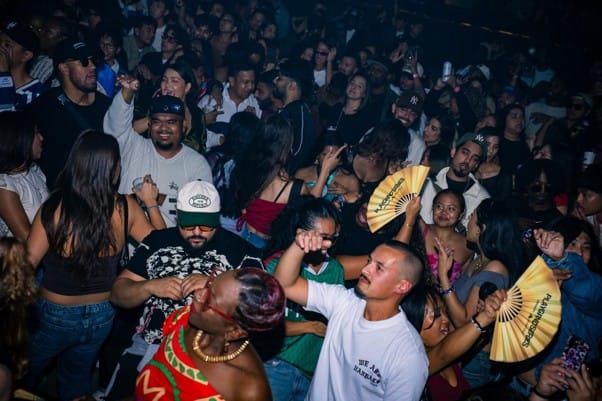
Live shows convert listeners into fans by creating direct interaction, shared experience, and repeat engagement. Even small venues can produce strong fan relationships when attendees return, follow, and stay connected after the event.
For instance, Bandsintown reports that it connects more than 95 million fans, 645,000 artists, and 45,000 venues. This shows how to grow your music audience by helping them discover and follow artists through local events.
Treat each show as part of a structured fanbase system.
- Before the show, share rehearsal clips, setlist previews, and ticket reminders to build anticipation.
- During the show, collect email signups or QR scans at the merch table to capture direct fan access.
- After the show, post live clips, tag the venue, and acknowledge fans by city to reinforce the connection.
- Between shows, message active fans, share photos, and announce upcoming dates to maintain engagement.
Build an email list & music community around your brand
An email list gives artists direct access to fans without relying on platform algorithms. While social platforms support discovery, email and community channels support retention by keeping fans connected between releases.
Email remains effective because it reaches fans with clear intent. MailerLite reported in its 2025 benchmarks an average open rate of 43.46%, click rate of 2.09%, and unsubscribe rate of 0.22%. This indicates that audiences still engage when the content is relevant and expected.
Build your list by offering clear value:
- Early access to unreleased tracks
- Private demos or alternate versions
- First access to show tickets
- Limited merch drops
- Monthly voice notes or studio updates
- Fan polls that influence releases
Community channels should extend this connection. Instead of using them only to share links, give fans a defined role like voting on versions, reacting to previews, commenting on ideas, remixing content, attending events, or supporting releases.
Get featured on Spotify playlists & music blogs
Playlists and blogs extend reach when there is already clear positioning and listener activity. They work as distribution amplifiers, not as a starting point for building a fanbase.
Spotify requires artists to use Spotify for Artists to submit unreleased tracks for editorial consideration. Submitting at least seven days before release places the track in followers’ Release Radar. More than 150,000 artists were playlisted for the first time between 2020 and 2021, which shows that new artists can still break through with the right signals.
Prepare structured inputs before pitching:
- Artist positioning: One clear line explaining who you are and why the track matters
- Genre and mood tags: Precise enough for curators to place the song
- Release context: Timing, audience response, and scene relevance
- Social proof: Comments, live clips, fan reactions, or early traction
- Clean assets: Private stream, track link, electronic press kit (EPK), photos, short bio
Sell merchandise & build a strong music brand
Merchandise turns an artist’s identity into something fans can wear, collect, or own. It works as a brand extension that strengthens the connection beyond streaming or social platforms.
Merch performs when it follows a defined artist identity. If the sound, visuals, or message are unclear, products feel generic and do not convert. Spotify reported that between 2022 and 2024, the number of artists with under one million monthly listeners selling merch grew more than 3x, while total merch sales for that group increased more than 6x.
Start with focused items:
- One wearable item: Tee, hoodie, cap, or tote
- One collectible: Poster, cassette, vinyl, or signed lyric sheet
- One digital or fan item: Private demo pack, stems, sample pack, or fan-only content
- One show-only item: Limited drops available only at live events
How to track online music marketing analytics to understand your fans?
Music analytics identifies which listeners are moving from passive streams to active fan behavior. The focus is on engagement, retention, and conversion signals rather than total plays.
A single stream indicates exposure. Repeat listening, saves, comments, reposts, and conversions indicate intent. Spotify defines monthly active listeners as people who intentionally stream an artist within 28 days. This helps in distinguishing active fans from casual listeners.
Track these metrics weekly:
Signal | What it actually measures | Why it matters | How to act |
Conversion path tracking | Journey from discovery to action | Shows what drives fans | Double down on platforms where listeners convert (not just view) |
Engagement depth per listener | Combined actions per user | Shows audience quality | Identify top fans and feature them in content or repost chains |
Geographic clustering | Cities with dense listener activity | Reveals fan pockets | Run city-specific content or announce small shows in top locations |
Listener retention curve | Where listeners drop off within a track | Identifies the strongest moments in your music | Clip top 5-10 sec segments with the highest retention and reuse in short-form video and live intros |
Release-to-engagement lag | Time taken to get interaction | Indicates music audience growth alignment | Adjust release timing or pre-release buildup if engagement is delayed |
Repeat listener ratio (7-28 days) | % of listeners who return after first play | Indicates fan stickiness | DM or reward repeat listeners with early access drops or unreleased versions |
Save-to-stream rate | Saves compared to total plays | Signals long-term intent | Re-promote high-save tracks with new content instead of releasing new music immediately |
Common mistakes artists make when trying to build a fanbase
Most fanbase growth issues come from treating promotion as a one-time event instead of an ongoing system. Building a fanbase requires repeated exposure, clear positioning, and direct interaction with listeners over time.
Avoid these common mistakes:
- Promoting only on release day: A single announcement limits reach. Pre-release content and post-release reminders are needed to keep the track visible
- Posting everywhere without a platform role: Each platform should have a function:
- short-form video for discovery
- streaming platforms for listening
- email for retention
- live shows for conversion
- Chasing viral reach without fan capture: High views do not convert unless listeners know where to follow, stream, or stay connected
- Ignoring comments and DMs: Early engagement signals interest. Responding helps turn listeners into repeat fans
- Changing identity every release: Variation is useful, but consistent elements help listeners recognize and return to your music
- Tracking only streams: Streams show exposure. Saves, follows, comments, and repeat listeners indicate stronger fan intent
- Waiting for a label to drive growth: Artists can build direct fan systems through distribution, content, email, merch, and community engagement without relying on external support
How to build a fanbase on SoundCloud?
Building a fanbase on SoundCloud means turning listening into interaction through comments, reposts, follows, and direct fan engagement. The platform combines discovery, community, distribution, and monetization in one system, which allows artists to grow and retain fans without splitting activity across multiple tools.
SoundCloud works as a fanbase engine because listening and interaction happen in the same place. Artists can upload tracks, see who is listening, and engage directly with fans who respond to their music.
Key SoundCloud features that support fanbase growth:
- Fan-Powered Royalties: Earnings are based on actual listener behavior, rewarding repeat fans over passive streams
- Move Your Music: Transfer your catalog from another distributor while maintaining continuity across releases
- Ascending: Artist development program that increases visibility for artists gaining traction on the platform
- Direct fan engagement tools: Comments, reposts, follows, and messaging that allow artists to interact with listeners in real time
Final thoughts
Building a fanbase as an artist is a process of aligning multiple systems rather than relying on a single channel. Discovery brings listeners in, but growth depends on how often they return, interact, and stay connected over time.
Each layer plays a specific role. Branding creates recognition, audience data informs decisions, content drives discovery, and direct channels such as live shows, email, and community convert attention into ongoing support. When these elements are structured together, fan growth becomes more predictable and less dependent on one platform or moment.
So, ready to build around the fans already listening? Switch to SoundCloud Artist Pro to release more music, distribute everywhere that matters, and turn SoundCloud engagement into a stronger fanbase.
Frequently Asked Questions
How long does it take to build a fanbase as an artist?

What’s the fastest way to get fans on SoundCloud?
How do artists get noticed without a label?
Should artists focus on one platform?
How often should artists release music?
What social media platform is best for musicians?