


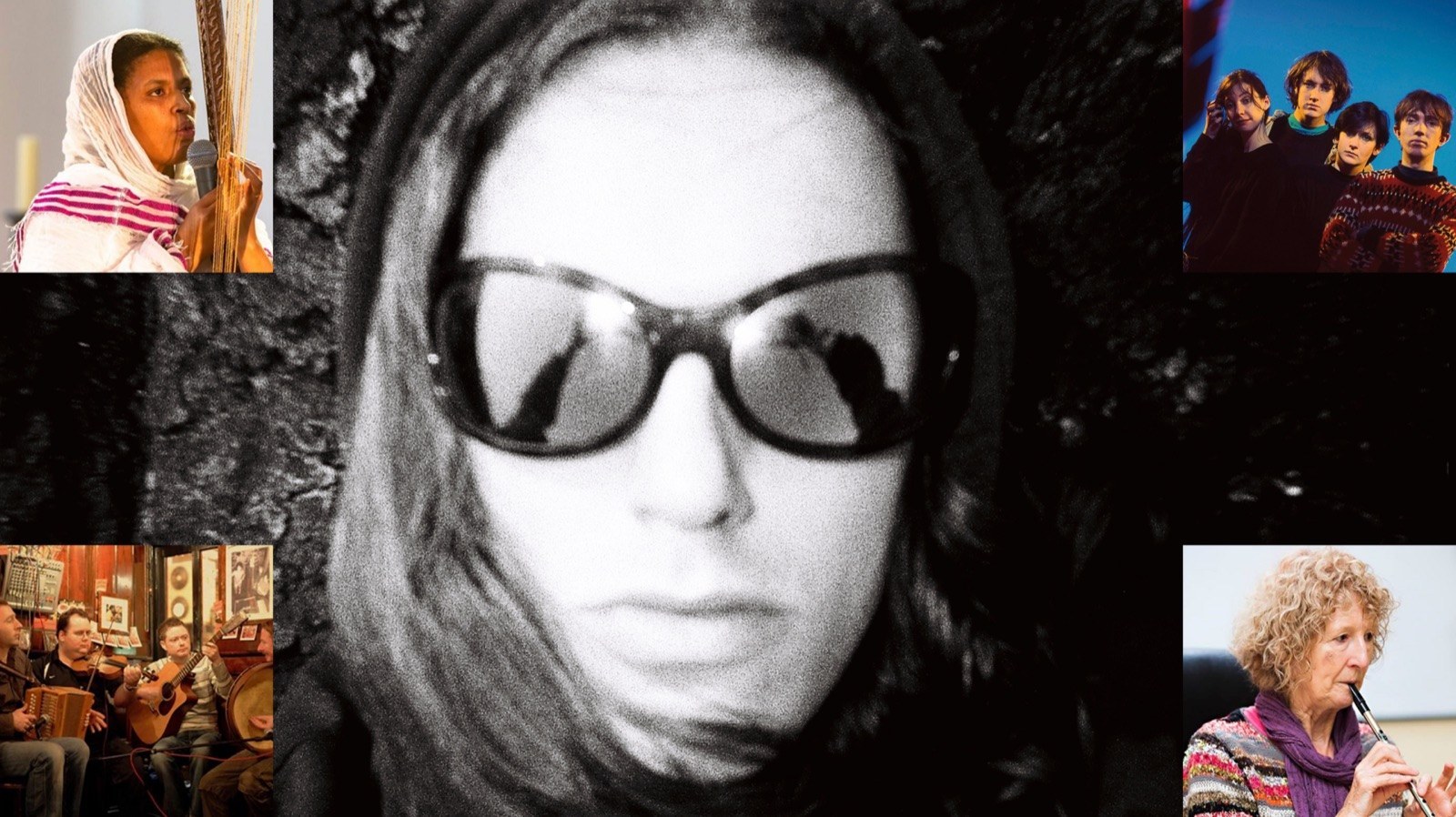

On Songs for Nothing, the new album by the Irish artist Olan Monk, a disparate group of influences share, but never jostle, for space. Monk has a deft way of combining elements from their country’s traditional music with more contemporary rock inputs, and it never sounds forced. Listening to the record, you will hear everything from sludge metal to cloud rock to emo rap in the mix; underpinning it all is the Irish music that, as we learned in our interview with the artist, was a major part of Monk’s childhood that was then rediscovered upon their return to the West Coast of Ireland after a long stint abroad. Our conversation touches on that narrative, as well as some formative musical moments—we weren’t expecting a certain legendary technical metalcore band to get a shoutout, but we were delighted that they did—and a whole lot more. Give it a read, and listen to Songs for Nothing, below.
Can you remember the first show you ever went to?
Olan Monk: The first show I remember going to on my own was The Dillinger Escape Plan in Whelans in Dublin. I was around 15 and travelled across the country with a fake ID.
How has the process of growing up on the West Coast of Ireland, leaving to go abroad, and then coming back informed how you are currently writing and producing music?
I grew up in the Gaeltacht region of Cois Fharraige, Conamara, looking out from Galway Bay to the Atlantic Ocean. I heard a lot of Irish traditional music and songs in the Irish language as a child. There was also this shadow presence of the influence of historic and continued migration from this region west and across the Atlantic Ocean to America, or east across the country and the Irish Sea over to England. My youth was defined by this mix of classical music at home where my mother was a piano teacher; of rock, pop, and electronic music coming in over the airwaves; and of local traditional music. We were fortunate to have Mary Bergin, a local legend and world-renowned tin whistle player, teaching us the instrument at school.
As an adult, years spent living away from home gave me the opportunity to experience and appreciate many different music cultures–whether these were established and evolving local scenes and sounds in cities like London, regional and rural musical traditions in Portugal, or through meeting many people of different cultural backgrounds who carried their musical traditions and heritage with them. This distance from home also gave me a new appreciation of music from the west of Ireland, as an old music that has survived on the coastal margins of Europe, sharing more in common with music from other remote regions around the world than it does with anything else. Returning to live and work here in Conamara, I tried to consolidate these influences by making a record that has a contemporary and Atlantean surface but undertones of something more ancient.
What excites you the most about your new record?
The extent of the instrumental and vocal arrangements. It was such a rewarding experience to get to work with so many musicians: vocalists and instrumentalists on this record. It didn’t feel like making a solo record at all. It doesn’t sound like one either.
How did you choose the collaborators on this new record? Is there a common thread that you think unites them all?
We’ve shared time and space as friends and musicians for years. I think we’re all involved in electronic, instrumental, and vocal music in different ways, and have shared experiences of working in different areas of music. It’s also possible that we’ve all grown up with the experience of people performing music together informally as part of our families or in different local communities in Ireland. Although we don’t all share the same musical backgrounds, I think that the shared experience of informally playing music with other people has translated into other kinds of music-making and performing.
Can you remember the first song you ever wrote? What did it sound like?
It was on an acoustic guitar, a few chords around the harmonic minor scale. And the lyrics were about trying to take a god from a machine. Later, I remember playing a version of this with a band on an electric guitar and trying to add some MBV level distortion.
Any major non-musical influences at the moment?
Watching the seasons change. To soundtrack this, I've been listening to a lot of begana music, traditional songs with lyre accompaniment from Ethiopia. There are some heavenly recordings of Sosena Gebre Eyesus performing.
What does your dream collaboration look like?
Enya.